
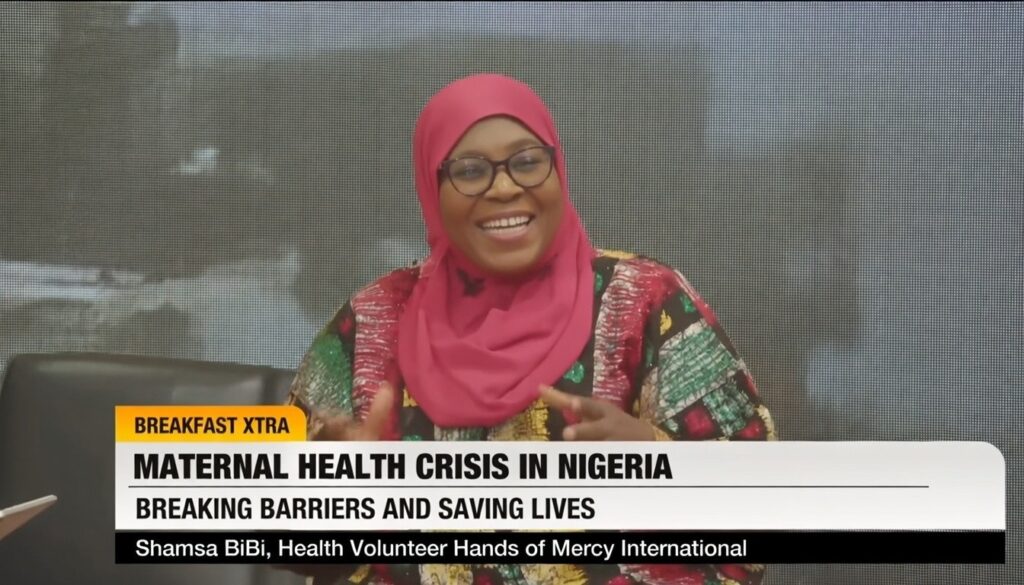
Breaking Barriers, Saving Lives: Addressing Nigeria’s Maternal Health Crisis
On a morning broadcast segment, Shamsa BiBi, a health volunteer with Hands of Mercy International, spoke candidly about one of Nigeria’s most urgent public health challenges: maternal mortality.
Nigeria accounts for a significant share of global maternal deaths. According to recent estimates, the country contributes nearly 20% of all maternal deaths worldwide, with an estimated 512 maternal deaths per 100,000 live births. Behind these numbers are preventable causes—hemorrhage, infections, high blood pressure, and limited access to skilled care during pregnancy and childbirth.
During the discussion, Shamsa highlighted that the issue is not only medical but systemic. Many women, particularly in rural and underserved communities, face barriers such as distance to health facilities, lack of transportation, financial constraints, and limited awareness of prenatal care. In some areas, cultural practices and low availability of skilled birth attendants further increase the risks.
Drawing from her experience on the ground, she emphasized the importance of early antenatal care, skilled delivery, and community awareness. “We are not just responding to emergencies,” she explained. “We are working with communities to prevent them.”
Through initiatives led by Hands of Mercy International, volunteers like Shamsa are helping bridge these gaps—supporting referrals, educating mothers, and strengthening links between communities and health facilities. Programs focus on increasing the number of women attending prenatal clinics, promoting facility-based deliveries, and improving access to essential maternal health services.
There has been progress. Nigeria has seen gradual improvements in maternal health outcomes over the years, but the pace remains uneven, especially in regions with limited infrastructure. Experts agree that sustained investment in primary healthcare, community health systems, and women’s education is critical to accelerating change.
Shamsa’s message was clear and grounded in reality:
maternal deaths are largely preventable, and with the right systems, awareness, and support, more mothers can survive—and thrive.
Address: 4520 Wagon Trail City, CA 94531
Phone: 951-614-9084
Email: secretariat@handsofmercyinternational.com
© 2026 Hands of Mercy International. All rights reserved.
Privacy Policy | Terms of Service