
Global Humanitarian Crises in a Post-Pandemic World
Global Humanitarian Crises in a Post-Pandemic World: How Hands of Mercy International Continues Supporting Vulnerable Communities At Hands of Mercy International, we recognize that recovery is not equal for everyone. In many of the regions we support, families were already facing severe hardship long before the pandemic emerged. COVID-19 intensified existing inequalities and exposed deep vulnerabilities within communities already affected by conflict, poverty, and displacement. For years, communities across the world have faced overlapping humanitarian challenges driven by conflict, displacement, hunger, climate shocks, and public health emergencies. While some nations have begun rebuilding after the COVID-19 pandemic, many vulnerable populations continue to struggle with the long-term effects of economic disruption, weakened healthcare systems, and growing humanitarian needs. Today, humanitarian action requires more than emergency response alone. It requires long-term investment in resilience, health systems, livelihoods, food security, and community-led recovery. Across different parts of the world, Hands of Mercy International continues working alongside local communities and partners to help families rebuild hope and restore dignity. Yemen: Communities Facing Conflict and Food Insecurity Years of conflict and economic collapse have left millions of people in Yemen facing one of the most severe humanitarian emergencies in the world. Families continue to endure displacement, food shortages, and limited access to healthcare, clean water, and sanitation services. Many communities remain highly vulnerable to disease outbreaks due to weakened healthcare infrastructure and limited public health awareness. Children and women are among the most affected, particularly in areas where access to nutrition and essential services remains limited. Hands of Mercy International supports vulnerable communities by promoting access to clean water, hygiene awareness, nutritional support, and community resilience initiatives designed to help families recover and adapt during prolonged crises. Democratic Republic of Congo: Responding to Health Emergencies and Displacement The Democratic Republic of Congo continues to experience recurring humanitarian challenges driven by conflict, displacement, disease outbreaks, and natural disasters. Communities in several provinces face insecurity while also coping with food shortages and limited healthcare access. Public health emergencies such as Ebola and COVID-19 placed enormous pressure on already fragile health systems. In addition, displacement caused by violence and environmental disasters continues to affect thousands of families. Hands of Mercy International works alongside local actors to support hygiene awareness campaigns, strengthen community resilience, and improve access to essential humanitarian services. Through community-based approaches, families receive support aimed at reducing health risks and strengthening long-term recovery. Afghanistan: Supporting Families Amid Uncertainty Decades of instability, economic hardship, and displacement have left millions of Afghans in urgent need of humanitarian support. The combined effects of conflict, poverty, drought, and the pandemic continue to affect livelihoods and limit access to basic services. Women, children, and internally displaced families remain among the most vulnerable populations. Access to healthcare, education, and sustainable income opportunities remains a significant challenge in many communities. Hands of Mercy International believes that restoring hope requires both emergency assistance and long-term empowerment. Community-centered support initiatives help families strengthen resilience while promoting dignity, recovery, and sustainable livelihoods. Sudan: Humanitarian Needs Continue to Grow Sudan continues to face significant humanitarian pressures linked to displacement, food insecurity, regional conflict, and refugee movements. Thousands of families living in camps and host communities face limited access to healthcare, clean water, sanitation, and protection services. Humanitarian conditions remain especially difficult for displaced women and children who often lack access to consistent medical care and essential support systems. Hands of Mercy International remains committed to supporting vulnerable communities through health awareness initiatives, humanitarian assistance, and programs that strengthen community resilience and social support systems. Building Long-Term Resilience Beyond Emergencies Humanitarian crises do not end when headlines fade. Recovery requires sustained support, community leadership, and long-term investment in resilience. At Hands of Mercy International, our mission goes beyond emergency relief. We are committed to helping communities build safer, healthier, and more resilient futures through programs that strengthen livelihoods, improve well-being, and restore hope. From humanitarian response and child well-being to women’s empowerment and community resilience, we continue working alongside vulnerable populations to create pathways toward recovery and long-term transformation.
Rebuilding in Ukraine: Displaced communities on the path to recovery
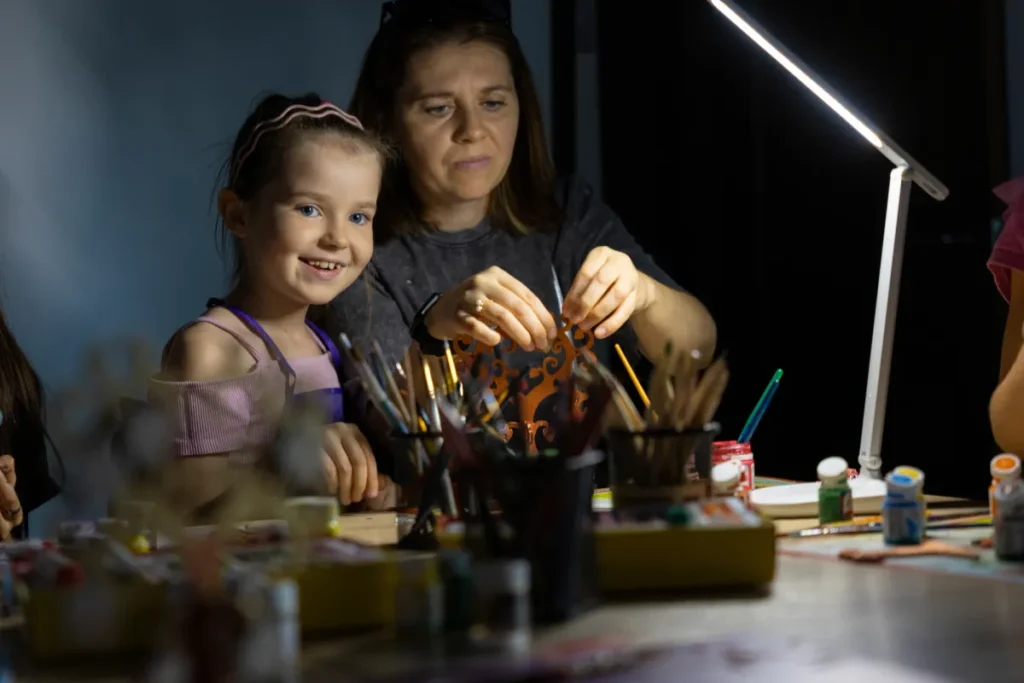
Rebuilding in Ukraine: Displaced communities on the path to recovery Adapting to life in the midst of conflict requires a continuum of support During a blackout, Hanna* (left) and her mother Yuliia* find respite from the violence as well as community connection during an art therapy session.February 04, 2025 Facebook Twitter Linkedin Envelope Kateryna Alieko Mercy Corps Communications Manager for Ukraine Even as the full-scale invasion of Ukraine enters its third year with no end in sight, residents continue to endure – finding ways to persevere and heal amidst the devastation. The ongoing conflict in Ukraine has left more than 14 million people in need of humanitarian aid, internally displacing nearly 4 million residents. Since the escalation in 2022, Mercy Corps has supported more than 860,000 people affected by the conflict in Ukraine and neighboring countries. To meet the specific needs of those whose lives have been upended, Mercy Corps partners with local organizations most familiar with these communities to provide urgent aid to those in active conflict zones, while also offering more long-term support to those building toward self-sufficiency. Emergency aid continues to meet urgent needs Mercy Corps supports people in both the immediate aftermath of displacement and during the long road to stability. To help families cope, a continuum of support is necessary. Emergency kits are the most common first step, followed by shelter support, multipurpose cash assistance, and mental health services. Once stabilized, entrepreneurial training and small-business grants support both communities and individuals as they reclaim their lives and their self-sufficiency. Raisa* visits a hygiene kit distribution event hosted by Mercy Corps to pick up essential items that her family needs as they settle into a new, safer city. Raisa* didn’t want to leave her hometown in the Donetsk region, but increasing violence and constant explosions forced her to flee to the Ukrainian city of Zaporizhzhia where she’s now living with her daughter and son-in-law. “We need everything,” Raisa said. “We need all the humanitarian aid.” Upon arrival in the new town, Raisa received a hygiene kit distributed by a Mercy Corps partner organization, Pomagaem Charitable Trust. Essentials like hygiene products help to meet the everyday needs of vulnerable populations, such as the elderly, as they are often forced to flee with little more than what they are able to carry. Mental health services create connection Children feel safe and happy while participating in the art therapy program, a respite from the fear they experience at home due to air raid sirens and explosions. When the full-scale invasion began, Yuliia* and her three children stayed in an underground shelter for five months. Though they’re back in their home now, constant sirens and explosions continue to destabilize their sense of safety. To get out of the house, Yuliia and her two youngest daughters began attending art therapy classes at a community center run by Perspectyva, a Mercy Corps partner. Her daughters feel more at ease and happier there, where they have opportunities to connect and build friendships with the other children. Sustained access to mental health services is crucial for people who want to go back to work, care for their families, and participate in rebuilding their communities. Yuliia attends group therapy sessions at the center, which make her feel like a weight has been lifted. She gets the support she needs to help process her traumatic experiences. “I can express everything that bothers me here,” she said, “and I feel very lighthearted afterwards.” The connection Yuliia has found at the center makes her feel more hopeful. “There will be peace in this world after all,” she said, “and our children will start to live fully.” Shelter support and cash assistance provide stability Tetiana wakes her daughter from a nap. They are staying in a three-bedroom apartment with Tetiana’s mother, which they were able to secure with housing assistance from Mercy Corps. Mercy Corps helps to provide shelter for internally displaced people through a multipurpose cash assistance program, which allows families to prioritize what they need most, whether it is food, medicine, clothing, basic household items, or housing expenses. Tetiana, a mother of four, was displaced from her village because of the war. The cash assistance she received through Mercy Corps’ local partner organization Perspectyva, was key to helping secure an apartment in Mykolaiv for several months – freeing up more of her family’s money for food and baby formula for her youngest. While she’s grateful for stable and safe housing, she’s counting the days until it’s safe to return to her village. “[I have] faith in a bright future,” Tetiana said, “that we will return home.” Stay connected to our work around the world. To help communities affected by the conflict, Mercy Corps supports entrepreneurs, business owners, and farmers to rebuild economic resiliency through grant programs. By growing their businesses and earning stable incomes, grant recipients are able to decrease their reliance on aid while also supporting the recovery of their larger communities. Microbusiness grants enable entrepreneurs to reclaim livelihoods Daryna* received a grant for her small business where she sews and sells traditional clothing, dolls, and more. Daryna* has been sewing for over 20 years, creating and restoring culturally significant Ukrainian clothing and textiles. She also worked as a tour guide in Bakhmut (Donetsk region), taking visitors through the history and culture of her hometown. She was devastated to flee from Bakhmut to Dnipro, where her home was completely destroyed. “The city for me… my home is my city,” she said. “I know that my city smells like wet bricks after the rain. I know that it tastes like the bitterness of asters or marigolds. I’ve been to many different countries before the full-scale invasion, and I’ve traveled around Ukraine a lot. But there is no better city than mine.” Through a microbusiness grant program, implemented together with our partner organization Free People Employment Center, Daryna bought a sewing machine and iron for her small business sewing and selling traditional clothing, dolls,
The facts: The crisis in Sudan
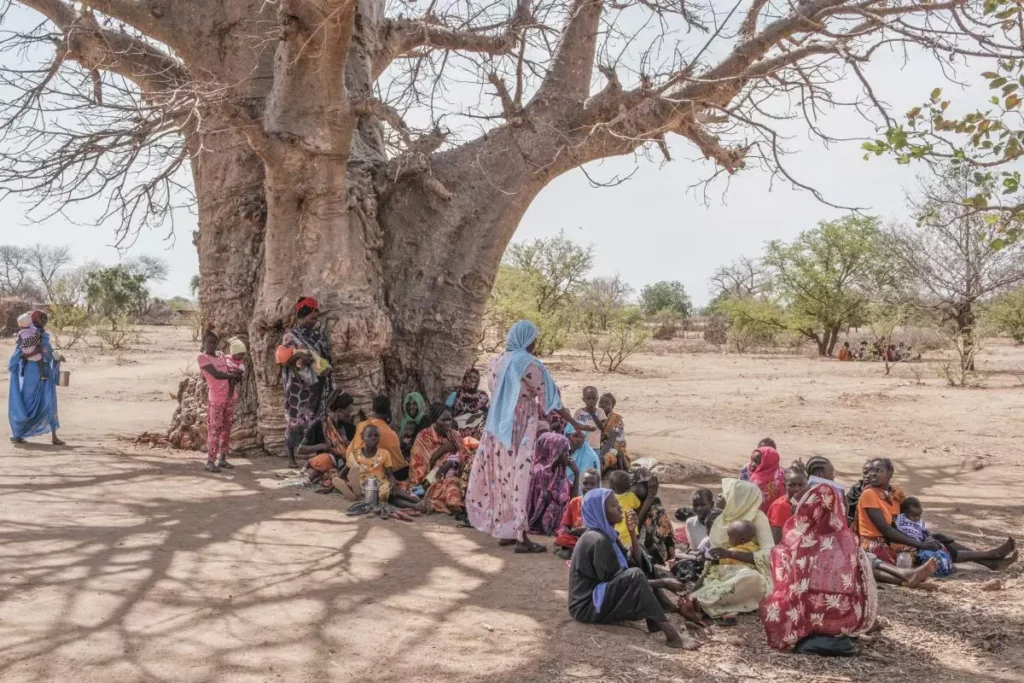
The facts: The crisis in Sudan In Loembre, Sudan, women and children wait for food aid in a camp for displaced people. More than 21 million people have faced severe hunger across the country since the violence escalated in 2023.May 02, 2023 • UPDATED November 05, 2025 Facebook Twitter Linkedin Envelope Sudan is facing renewed violence, displacement and an unprecedented need for humanitarian aid. The fierce fighting that began on April 15, 2023 has compounded the crisis across the country. According to the United Nations, nearly 13 million people have fled their homes in search of safety, and 8.6 million people have been displaced inside the country since the fighting escalated. El Fasher, capital of North Darfur, fell in November 2025 after enduring over 500 days under siege. People who had already been surviving on animal hides, wild plants, and livestock feed now must grapple with an even more desperate fight for their lives amid reports of killings, abductions, and mass displacement. “We must not look away from the horrors unfolding in El Fasher and across Sudan,” said Melaku Yirga, Mercy Corps Vice President, African Region. “Silence only fuels the suffering and allows it to continue. This is the moment for the world to act: to open access, protect civilians and humanitarian responders, and deliver the aid that can still save lives. The world cannot claim ignorance—only inaction.” Since 2004, Mercy Corps has worked in Sudan to support hundreds of thousands of Sudanese, displaced households, and refugees from nearby countries. Learn more about the current crisis and Mercy Corps’ work in Sudan. When did the crisis in Sudan begin? How is the conflict affecting people in Sudan? What was the situation in Sudan like before the current crisis? How is Mercy Corps supporting communities amidst the crisis? What is Mercy Corps’ experience working in Sudan? When did the crisis in Sudan begin? In 2021, a coup in Sudan ended a civilian transitional government that had been established following the ouster of former President Omar al-Bashir in 2019. The political transition was supposed to result in elections of civilian parties by the end of 2023. However, the power struggle between the Sudanese army and a paramilitary group called Rapid Support Forces reached a critical point on April 15, 2023, when clashes broke out across Sudan. The capital city of Khartoum is experiencing extensive violence due to the conflict, with fighting in many surrounding areas as well. More than 100,000 people have fled Sudan so far, and 300,000 are internally displaced due to the current crisis, according to the U.N. How is the conflict affecting people in Sudan? Tens of thousands of people have been killed since the fighting escalated in 2023, according to the UN. People are experiencing mass displacement, collapsing health services, severe food and water shortages—particularly across the Darfur and greater Kordofan regions. ▸ Watch Katy Crosby, Mercy Corps Senior Director US Policy and Advocacy, discuss the Sudan crisis in a November 2025 interview on “The Takeout.” Camps for internally displaced people have become the epicenter of the crisis. In Greater Darfur, Greater Kordofan, and Khartoum, people are trapped in overcrowded conditions with dwindling access to food, clean water, medical care, and safe shelter. With soaring malnutrition rates, a failing health system, water contamination, poor sanitation, and low immunization levels, disease outbreaks are having devastating consequences—including cholera, now present in all 18 states. With over 70% of hospitals out of service, millions are cut off from basic medical care. The war has devastated agriculture, which is crucial to Sudan’s economy and the main support for rural families. Once considered the country’s breadbasket, regions like Al Jazirah, Kordofan, and the White Nile have become too dangerous to farm. Violence, insecurity, and landmines have forced farmers to abandon their fields. The war’s economic shock is devastating an entire generation. Since fighting escalated in April 2023, Sudan’s economy has shrunk by over 40%—one of the sharpest collapses globally. Young people, who make up nearly 75% of the population, are bearing the brunt. Stay connected to our work around the world. What was the situation in Sudan like before the current crisis? Even before the ongoing conflict, an estimated 15.8 million people—about one-third of the population—were expected to need humanitarian aid in 2023. The number of children in Sudan who are malnourished was already rising at an alarming rate. About 4 million children under five and pregnant or breastfeeding women will be acutely malnourished in 2023 and need lifesaving nutrition services. Decades of conflict, limited investment in agricultural production, and climate shocks have resulted in cyclical food insecurity in many communities. Sudan depends on local agriculture for food security, but is hindered by floods and desertification. In Khartoum, refugees and people living in poverty face the highest rates of food insecurity in the country. The World Bank reports that record-setting floods in 2020 and 2022 resulted in billions of dollars in estimated damages, further compounding Sudan’s economic crisis of rapid inflation and increasing food prices. How is Mercy Corps supporting communities amidst the crisis? Amid one of the world’s fastest-growing humanitarian crises, we are providing life-saving support across all 18 states while also helping communities lay the foundations for long-term recovery. Today we are: Delivering emergency assistance. We are reaching displaced families with cash and voucher support so they can buy essentials like food, water, and hygiene supplies—helping nearly 100,000 people by 2025. Supporting food security and resilience. In states like Gedaref, Kassala, River Nile, and Northern State—key agricultural areas—we are helping smallholder farmers access quality seeds and tools to restore food production disrupted by conflict, displacement, and climate shocks. Preventing malnutrition. In partnership with local health authorities in Central Darfur, we are supporting with screening young children and pregnant or nursing women for malnutrition, providing treatment and education to help keep families healthy. Strengthening markets and livelihoods. In conflict-affected areas of Kordofan and beyond, we are helping small businesses get back on their feet and supporting communities to rebuild local economies. What is Mercy Corps’
“Everything is needed” Critical aid must reach Gaza as winter looms
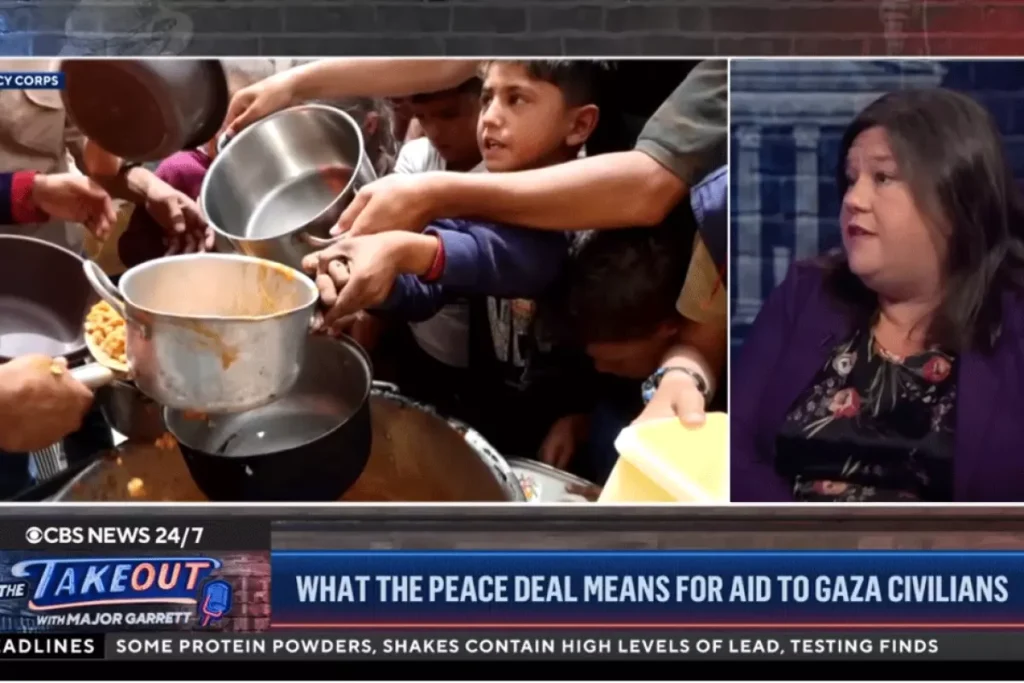
“Everything is needed” Critical aid must reach Gaza as winter looms Even as a fragile ceasefire takes hold, aid remains stalled at borders October 20, 2025 Facebook Twitter Linkedin Envelope While the bombardments in Gaza may have stopped, people still face grave danger. Aid organizations like Mercy Corps are in a race against starvation and the approaching winter weather. As the fragile ceasefire was announced, the first drops of winter rain began to fall. Kate Phillips-Barrasso, Vice President of Global Policy and Advocacy for Mercy Corps, recently joined “The Takeout with Major Garret” on CBS to provide a sobering look at the ongoing humanitarian needs and the efforts required to address them. “Time is of the essence, not only getting food in, but even in getting therapeutic feeding supplies for children.” And with winter approaching, the need for basic supplies, shelter, and medical care becomes even more critical to prevent significantly more deaths due to exposure and cold. https://youtu.be/BVxa4bqDPzI Kate underscores that humanitarian efforts must be scaled rapidly to ensure that the vulnerable population – especially children and the elderly living in makeshift, unorganized shelters – receive the necessary support to survive the coming winter season. Watch the October 14, 2025 segment above, courtesy of CBS News. Help bring emergency aid to families in Gaza and around the world. Give now Related topics Palestine Emergency response