
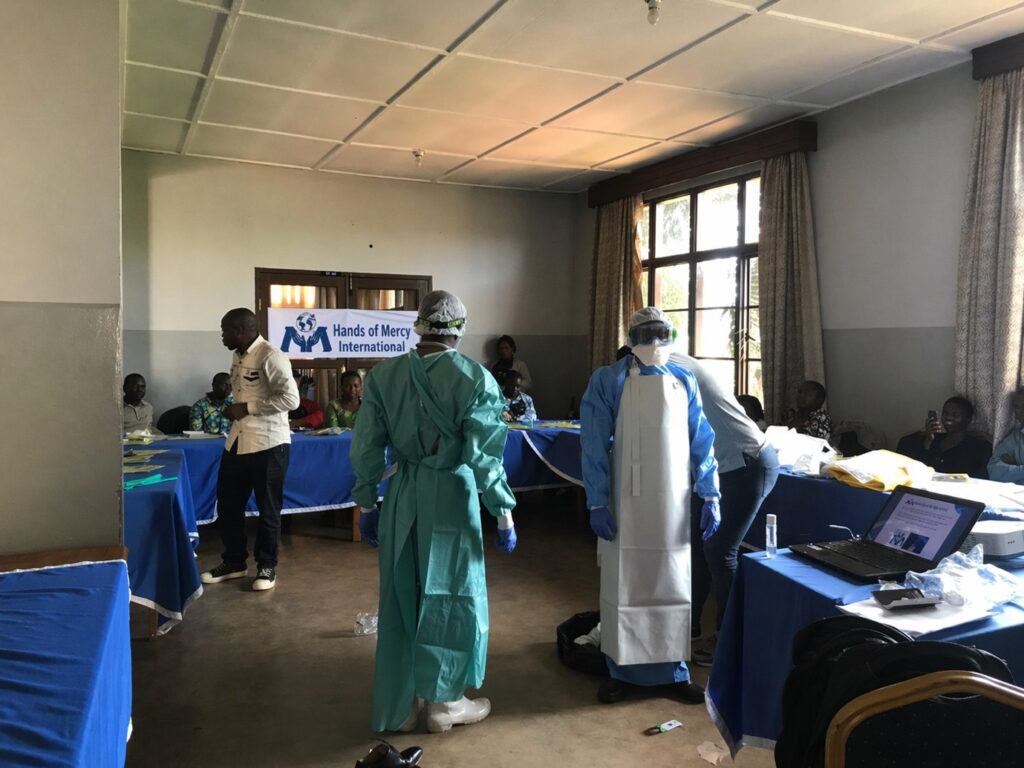
On August 1, 2018, the Democratic Republic of the Congo (DRC) confirmed an Ebola outbreak in North Kivu Province. As of December 25, there were 585 confirmed or probable cases, making this Ebola outbreak the second largest in history. The outbreak resulted in 356 deaths and spread across 16 health zones in two provinces—North Kivu and Ituri.
One of the greatest barriers to containing this deadly outbreak has been the ongoing armed conflict, which limits the ability of health workers to safely access certain areas. In addition, community resistance to vaccination, treatment, and safe burial practices has increased risks for responders and made it more likely for the virus to continue spreading.
Despite these challenges, Hands of Mercy International has been on the ground supporting efforts to stop the spread of the outbreak as quickly as possible. To address community resistance and encourage early reporting of suspected cases, the organization has been implementing community engagement initiatives. These efforts involve working closely with local health workers to raise awareness about Ebola, its risks, and the importance of seeking timely medical care.
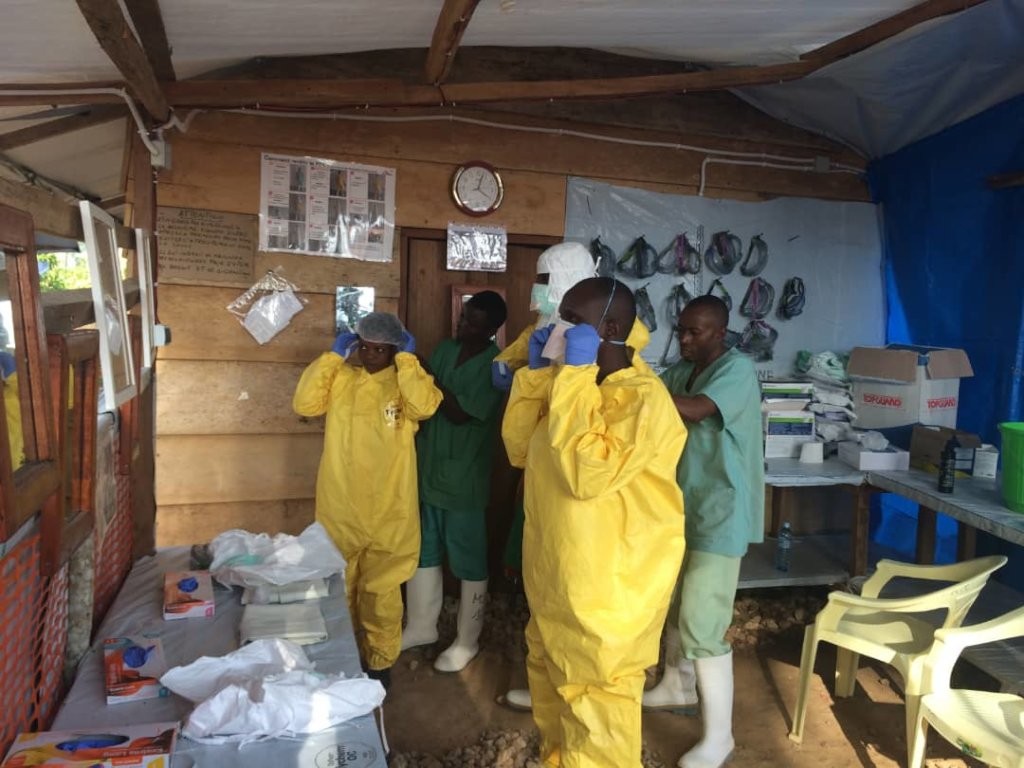
Staff prepare to provide care for Ebola patient
Hands of Mercy International has also supported the construction of more than 30 screening and referral units. These units are equipped to safely screen patients, visitors, and staff through no-touch temperature checks and rapid assessments for Ebola-like symptoms at health facilities. Through these interventions, hundreds of thousands of screenings have been conducted, helping to reduce the risk of transmission within health sites.
In North Kivu Province, Hands of Mercy International has been supporting the operation of an Ebola Treatment Center (ETC), one of several active centers in the region, providing care and treatment for suspected and confirmed cases. Health teams have been working tirelessly, particularly in high-risk areas such as Mabalako, where new cases continue to emerge. Many patients arrive at advanced stages of the disease, requiring urgent and intensive care.
Through its continued presence and collaboration with local communities, Hands of Mercy International remains committed to strengthening response efforts, improving access to care, and ultimately helping to contain the outbreak and protect vulnerable populations.
Address: 4520 Wagon Trail City, CA 94531
Phone: 951-614-9084
Email: secretariat@handsofmercyinternational.com
© 2026 Hands of Mercy International. All rights reserved.
Privacy Policy | Terms of Service