
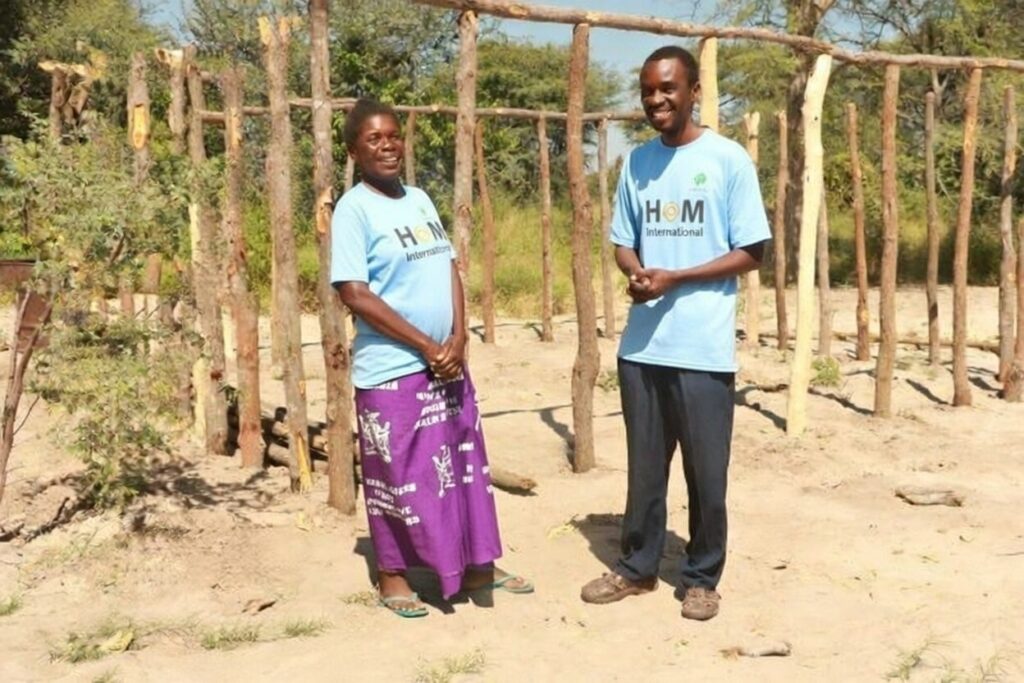
Innocent Sampaya stands beside Lumba Makuyu under the shade of a tree in Mwandi District, Zambia. Both are members of a Safe Motherhood Action Group (SMAG), serving their community as frontline community health workers. Every day, they walk long distances, visit homes, counsel families, and respond to emergencies—often before anyone else can.
At the heart of this work is Hands of Mercy International, whose approach is simple but powerful: invest in people from the community to protect the lives of mothers and children.
Community Health Workers (CHWs) are the backbone of HoM’s maternal and child health programs. Through targeted recruitment, hands-on training, and ongoing mentorship, HoM equips local volunteers with the knowledge, confidence, and tools they need to reach the most vulnerable and hard-to-reach families.
Each CHW supports between 50 and 200 households, providing regular home visits, health education, early identification of danger signs, and rapid response during emergencies. Their work does not just support the health system—it saves lives.
What led you to become a community health worker?
“There were two moments that changed my life,” Innocent explains.
“The first was watching a relative deliver at home without a skilled birth attendant. I could see how dangerous it was, but there was nothing we could do. The second moment stayed with me even more deeply. A newborn baby was found abandoned in a field, only hours after being born. The baby survived, but life has been very difficult for him.”
Innocent believes fear and isolation drove the mother’s decision.
“If she had known there was support—someone she could talk to, someone to help her—I believe things could have been different. Community and friendship matter.”
This belief led Innocent to join the Safe Motherhood Action Group, supported by Hands of Mercy International.
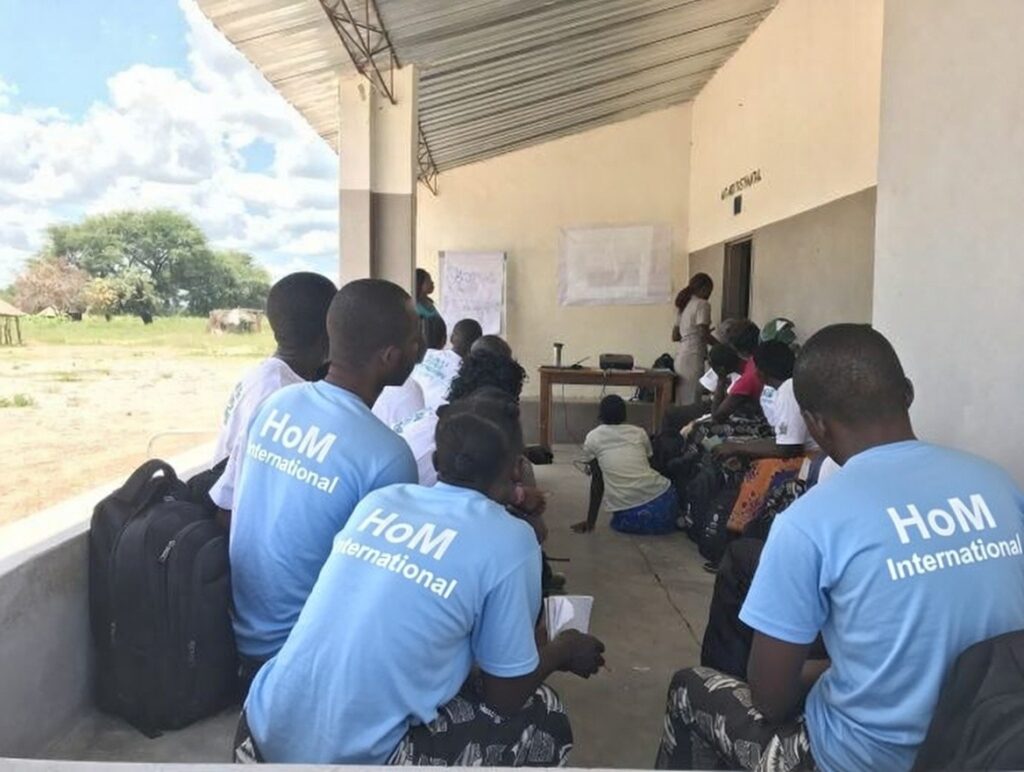
As a SMAG member, Innocent works tirelessly to identify pregnant women early and walk with them throughout their pregnancy journey.
“We teach mothers about nutrition—what foods help both mother and baby. We explain what is normal during pregnancy, like nausea or dizziness, so they don’t panic. And we are very clear about danger signs—bleeding, severe pain, or draining—and when to seek medical help immediately.”
From a SMAG perspective, pregnancy is treated with urgency.
“As soon as we find out a woman is pregnant, we treat it as a ‘problem’—not in a bad way, but because we must be ready. If we are proactive, we act instead of react. Here, that can mean the difference between life and death.”
HoM’s training emphasizes prevention, early action, and referral, helping SMAG members discourage harmful traditional practices and promote skilled care at health facilities.
Innocent recalls a powerful example involving Naomi, an elderly grandmother whose pregnant granddaughter began bleeding heavily.
“She called the SMAG immediately. We came together, carried her, contacted the nurse, and called for an ambulance. If it wasn’t for the SMAG, she might have lost the baby—or even her life.”
For Naomi, the impact is clear:
“It was them who carried her. It was them who called the nurse. It was them who helped save her life.”
Being a male SMAG member is not always easy.
“Pregnancy is often seen as women’s work,” Innocent says. “But we are trying to change that.”
Through HoM-supported community dialogues—often led by indunas (local leaders)—men are encouraged to see themselves as active partners in maternal and child health.
“I wanted to be a better husband and father. Now I help in the kitchen, bathe the children, and take part in their lives. Our relationships are stronger, and our children are healthier.”
Though some community members tease him, Innocent remains committed.
“When people see me helping at home, they joke that my wife has given me herbal medicine. I don’t care. My family is happy and healthy. This change is important.”
Today, Innocent has a new dream.
“I want to help train more community health workers.”
With the support of Hands of Mercy International, he hopes to pass on his skills and experience to the next generation—men and women who will stand on the front lines, act early, and ensure that no mother or child is left alone.
Because when communities are empowered, lives are saved—not by reacting to tragedy, but by preventing it.
Address: 228 W. Lexington St. Baltimore, Maryland 21201-3413
Phone: 877-435-7277
Email: Info@crs.org
© 2026 Hands of Mercy International. All rights reserved.
Privacy Policy | Terms of Service